



© 2025 FilterCY
Submit an application
Fill the form and we will contact you as soon as possible
By clicking the Submit button, you agree to our Data Privacy
Find the right water filtration system in 1 minute.
Answer a few quick questions and get personalized recommendations for the best water filtration system for your home — with a discount: a drinking water filter, water softener, or whole-house filtration system.
Installation of a water softener and ultrafiltration system for filtering water from two sources: municipal water and well water
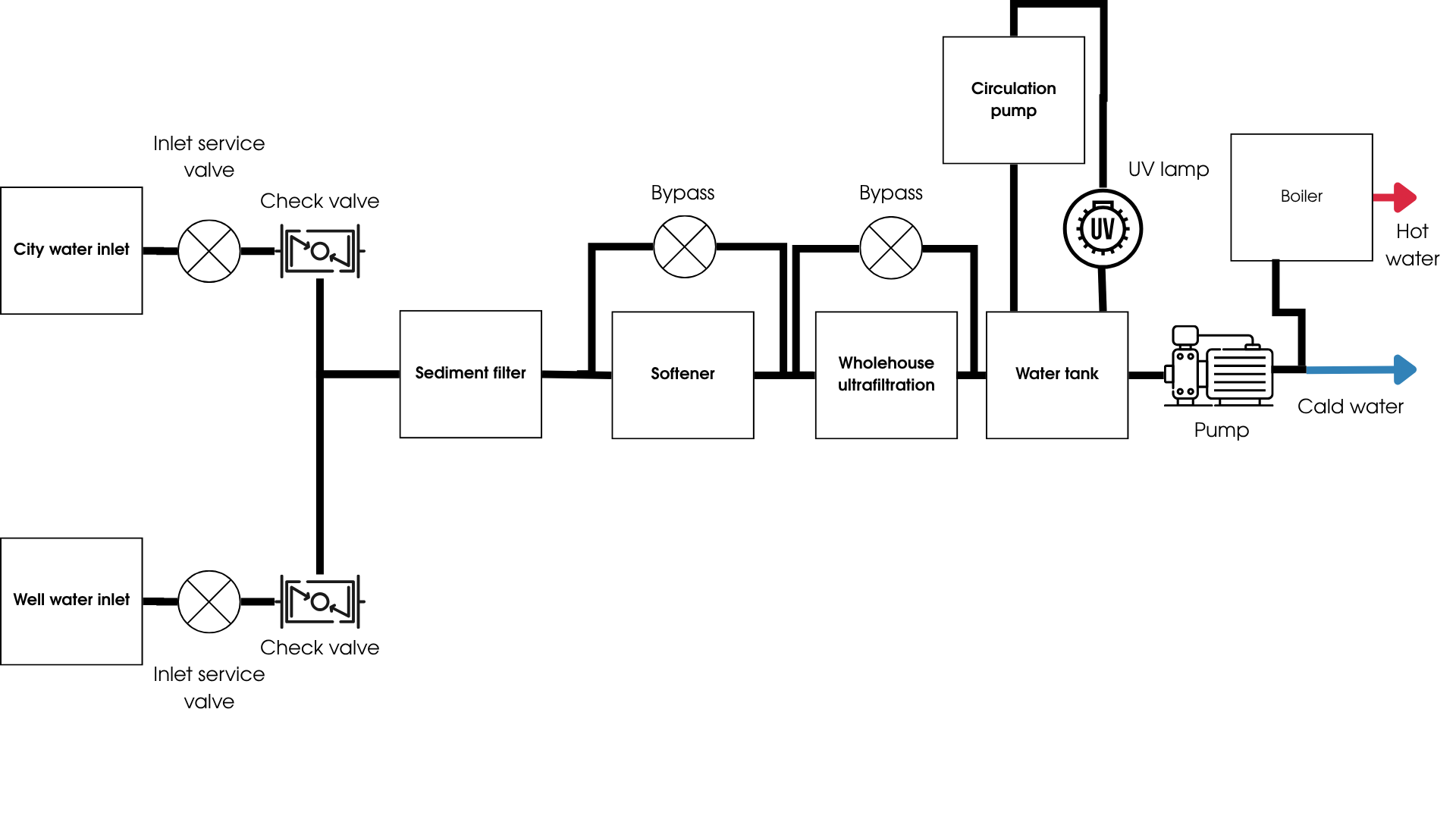
This diagram shows a water treatment system for a house with two water sources — municipal water and a well. After combining the flows, the water passes through mechanical filtration, softening, ultrafiltration, and a storage tank with recirculation and UV disinfection, after which it is supplied to the house water system and the boiler.
Such a configuration ensures stable water quality regardless of the source and protects the system from mechanical contaminants, hardness, and bacteria.
Such a configuration ensures stable water quality regardless of the source and protects the system from mechanical contaminants, hardness, and bacteria.
Water filtration scheme for a house with two sources: municipal water and well water
Author: Filter.cy Engineers
Expertise: water treatment and water filtration systems
Updated: March 2026
Expertise: water treatment and water filtration systems
Updated: March 2026
This system uses two water sources: municipal water and well water. Each source is connected through a service valve and a check valve, which allows control of water flows and prevents backflow between the lines.
After the flows are combined, the water passes through a PP sediment mechanical filter, which removes sand, rust, and suspended particles.
The water then enters the softening system, where hardness salts of calcium and magnesium are removed. The softener is equipped with a bypass line for maintenance.
The next stage is ultrafiltration (UF), which removes bacteria, colloids, and fine suspended particles. The ultrafiltration system is also equipped with a bypass line.
After that, the water enters a storage tank. The tank includes a water recirculation system and is equipped with a UV lamp, which provides additional disinfection and prevents bacterial growth during storage.
From the storage tank, a pump supplies water to the house water supply system.
After the tank, the water flow is split:
into the cold water supply line
into the line supplying water to the boiler for hot water production
This configuration ensures comprehensive water treatment and stable water quality regardless of the source.
After the flows are combined, the water passes through a PP sediment mechanical filter, which removes sand, rust, and suspended particles.
The water then enters the softening system, where hardness salts of calcium and magnesium are removed. The softener is equipped with a bypass line for maintenance.
The next stage is ultrafiltration (UF), which removes bacteria, colloids, and fine suspended particles. The ultrafiltration system is also equipped with a bypass line.
After that, the water enters a storage tank. The tank includes a water recirculation system and is equipped with a UV lamp, which provides additional disinfection and prevents bacterial growth during storage.
From the storage tank, a pump supplies water to the house water supply system.
After the tank, the water flow is split:
into the cold water supply line
into the line supplying water to the boiler for hot water production
This configuration ensures comprehensive water treatment and stable water quality regardless of the source.
Water flow logic
City water inlet
Well water (borehole)
↓
Service valves
↓
Check valves
↓
Combined flow
↓
PP sediment filter
↓
Water softener
↓
Ultrafiltration (UF)
↓
Storage tank with recirculation
↓
UV disinfection
↓
Pump
↓
Split flow
├─ Boiler → Hot water
└─ Cold water → House
City water inlet
Well water (borehole)
↓
Service valves
↓
Check valves
↓
Combined flow
↓
PP sediment filter
↓
Water softener
↓
Ultrafiltration (UF)
↓
Storage tank with recirculation
↓
UV disinfection
↓
Pump
↓
Split flow
├─ Boiler → Hot water
└─ Cold water → House
Step-by-step algorithm
- Municipal water and well water enter the system through separate inlets.
- Service valves are installed on each line to control the water supply.
- Check valves are installed to prevent reverse mixing of flows.
- The flows are combined into a single line.
- The water passes through a PP sediment mechanical filter.
- The water enters the softening system, where hardness salts are removed.
- A bypass line is installed for softener maintenance.
- The water then passes through the ultrafiltration (UF) system.
- A bypass line is installed for UF system maintenance.
- The water enters a storage tank.
- A water recirculation system operates in the tank.
- An installed UV lamp provides water disinfection.
- A pump supplies water from the tank to the house water supply system.
- The water flow is split into hot and cold lines.
When this scheme is used
This scheme is used in the following cases:
- the house has two water sources (municipal supply and well)
- water quality is unstable
- protection against bacteria and biofilm is required
- water storage in a tank is needed
- stable water pressure in the system is required
Key advantages of the scheme
- ability to use two water sources
- protection against backflow between sources
- removal of mechanical contaminants
- elimination of water hardness
- protection against bacteria and microorganisms
- stable water quality in the storage tank
- protection of the boiler and household appliances
Unlock the Benefits of Soft Water
Experience the incredible feeling of silky-soft water on your skin
Learn more Components and their functions
FAQ
They prevent backflow of water between the municipal line and the well.
Yes, the system allows shutting off any source using service valves.
It removes bacteria and fine particles, which is especially important when using well water.
It prevents bacterial growth during water storage.
To avoid water stagnation and deterioration of water quality in the storage tank.
Similar connection schemes
Optimal Water Filtration and Softening System for Houses and Apartments in Cyprus
Installation Layout of a Water Softener, Ultrafiltration System, and Reverse Osmosis System
How to install a water softener in an apartment in Cyprus
Installation scheme of a water softener after a storage tank: correct connection, bypass, and service valves. Learn how the system should operate.
Installation scheme of a water softener after a storage tank with a drinking water filter
Installation scheme of a water softener after a storage tank with a parallel line for a drinking water filter. Detailed description, system components, and operating principle.
Water softener installation diagram with reverse osmosis filter
Water softener installation diagram after the storage tank and reverse osmosis filter. Detailed description, system components, and operating principle.
Have a questions? Message us!
Recommended components for this configuration
BWT Water Softener 30L CLACK WS1CI
SKU: 700.954.29
€
1200
€
1350
The BWT 30L Water Softener, equipped with the state-of-the-art Clack WS1CI valve, is the best water softener system for tackling hard water issues common in Cyprus. This system effectively reduces limescale buildup, protecting your appliances and improving the efficiency of heating systems. With a 30-liter resin capacity, it delivers a service flow rate of up to 1,000 liters per hour, ensuring a steady supply of softened water for medium-sized households. The Clack WS1CI valve offers precise control over regeneration cycles, optimizing salt and water usage for cost-effective and sustainable operation. Its compact design allows for easy installation in any home. Upgrade to the BWT 30L Water Softener and enjoy the ultimate solution for combating hard water in Cyprus while enhancing your home’s comfort and efficiency.
Whole House Ultrafiltration System
€
950
€
The Whole House Ultrafiltration System is designed to deliver microbiologically safe, crystal-clear water to every tap in your home. Using an ultrafine membrane with a pore size of just 0.01 microns, this system removes bacteria, viruses, microplastics, and fine sediment, without removing healthy minerals or relying on chemicals.
Perfect for homes on municipal or well water, it ensures clean water for drinking, cooking, bathing, and laundry — all while extending the life of plumbing, appliances, and downstream filtration units. Easy to maintain and environmentally friendly, this is a long-term solution for households that prioritize water safety and quality.
Perfect for homes on municipal or well water, it ensures clean water for drinking, cooking, bathing, and laundry — all while extending the life of plumbing, appliances, and downstream filtration units. Easy to maintain and environmentally friendly, this is a long-term solution for households that prioritize water safety and quality.
Ecosoft UV E360 Ultraviolet Water Disinfection System
€
450
€
The Ecosoft UV E360 is a compact ultraviolet water disinfection system designed for residential and small commercial applications where microbiological safety is required.
The system uses UV-C radiation (254 nm) to inactivate bacteria, viruses, and other microorganisms by damaging their DNA, preventing replication. This is a physical disinfection method that does not require chemicals and does not alter the taste, odor, or mineral composition of water.
Inside the stainless steel AISI 304 chamber, a high-intensity UV lamp is protected by a quartz sleeve, ensuring stable performance and long-term resistance to deposits and corrosion. The unit delivers a UV dose of approximately 30 mJ/cm², sufficient to neutralize a wide range of pathogens in properly pre-treated water.
With a flow capacity of up to ~1.3–1.4 m³/h, the E360 is suitable for houses, apartments, small businesses, cafés, and technical installations. It is typically installed as a final disinfection stage after filtration or storage tanks to ensure microbiological safety of the water supply.
The system is energy-efficient (approx. 21 W), easy to maintain, and requires only periodic lamp replacement (typically once per year, up to 9000 operating hours).
Important engineering note: UV systems disinfect water but do not remove particles, dissolved contaminants, or biofilm already formed in pipes or tanks. Proper pre-filtration and system design are required for effective operation.
Key Features:
The system uses UV-C radiation (254 nm) to inactivate bacteria, viruses, and other microorganisms by damaging their DNA, preventing replication. This is a physical disinfection method that does not require chemicals and does not alter the taste, odor, or mineral composition of water.
Inside the stainless steel AISI 304 chamber, a high-intensity UV lamp is protected by a quartz sleeve, ensuring stable performance and long-term resistance to deposits and corrosion. The unit delivers a UV dose of approximately 30 mJ/cm², sufficient to neutralize a wide range of pathogens in properly pre-treated water.
With a flow capacity of up to ~1.3–1.4 m³/h, the E360 is suitable for houses, apartments, small businesses, cafés, and technical installations. It is typically installed as a final disinfection stage after filtration or storage tanks to ensure microbiological safety of the water supply.
The system is energy-efficient (approx. 21 W), easy to maintain, and requires only periodic lamp replacement (typically once per year, up to 9000 operating hours).
Important engineering note: UV systems disinfect water but do not remove particles, dissolved contaminants, or biofilm already formed in pipes or tanks. Proper pre-filtration and system design are required for effective operation.
Key Features:
- UV-C disinfection without chemicals
- Inactivates up to 99.8–99.9% of microorganisms
- Stainless steel AISI 304 reactor
- Quartz sleeve for stable UV transmission
- Flow rate up to ~1.36 m³/h
- Low power consumption (~21 W)
- Easy maintenance and annual lamp replacement
- Suitable for residential and small commercial use
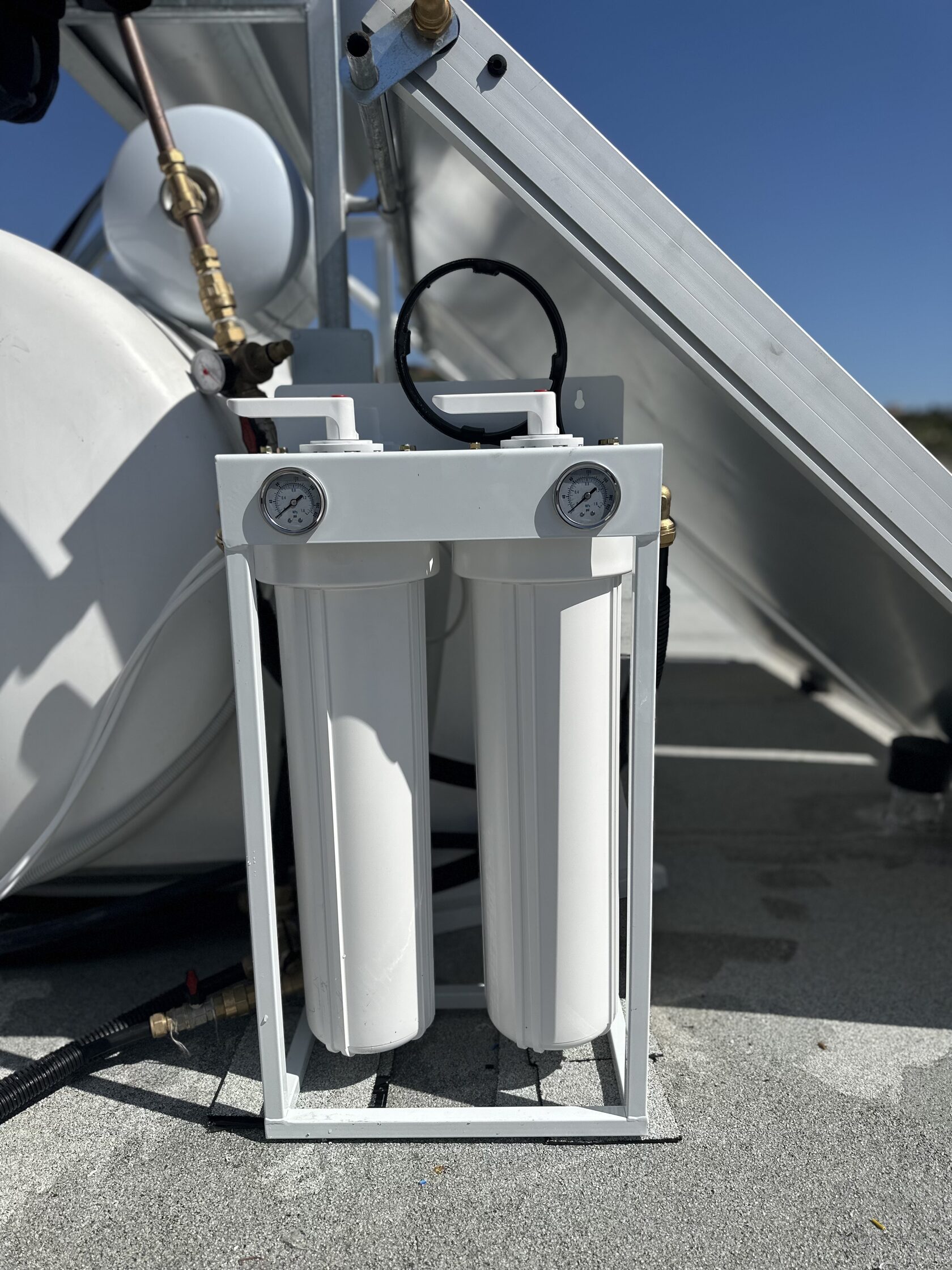
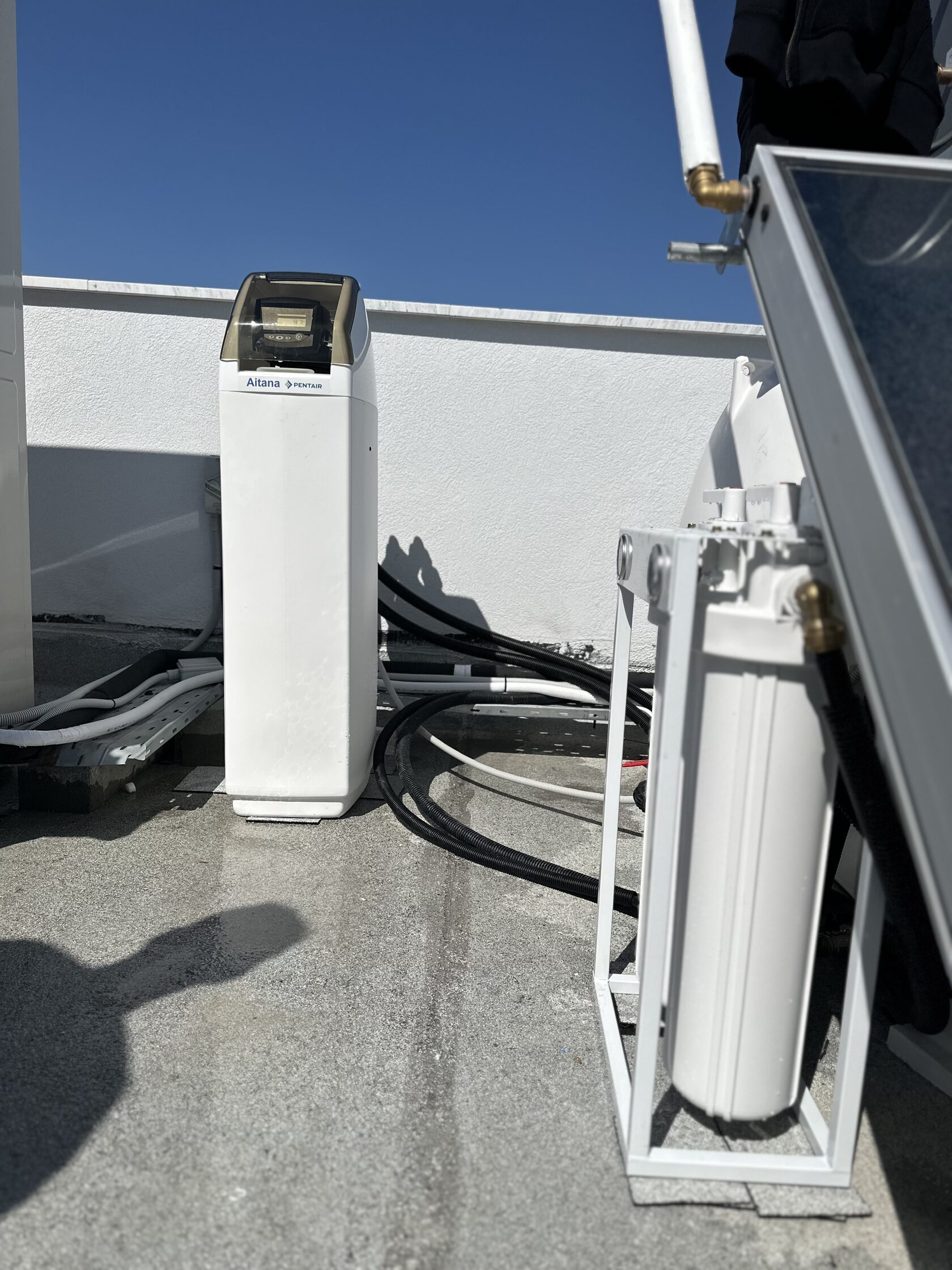
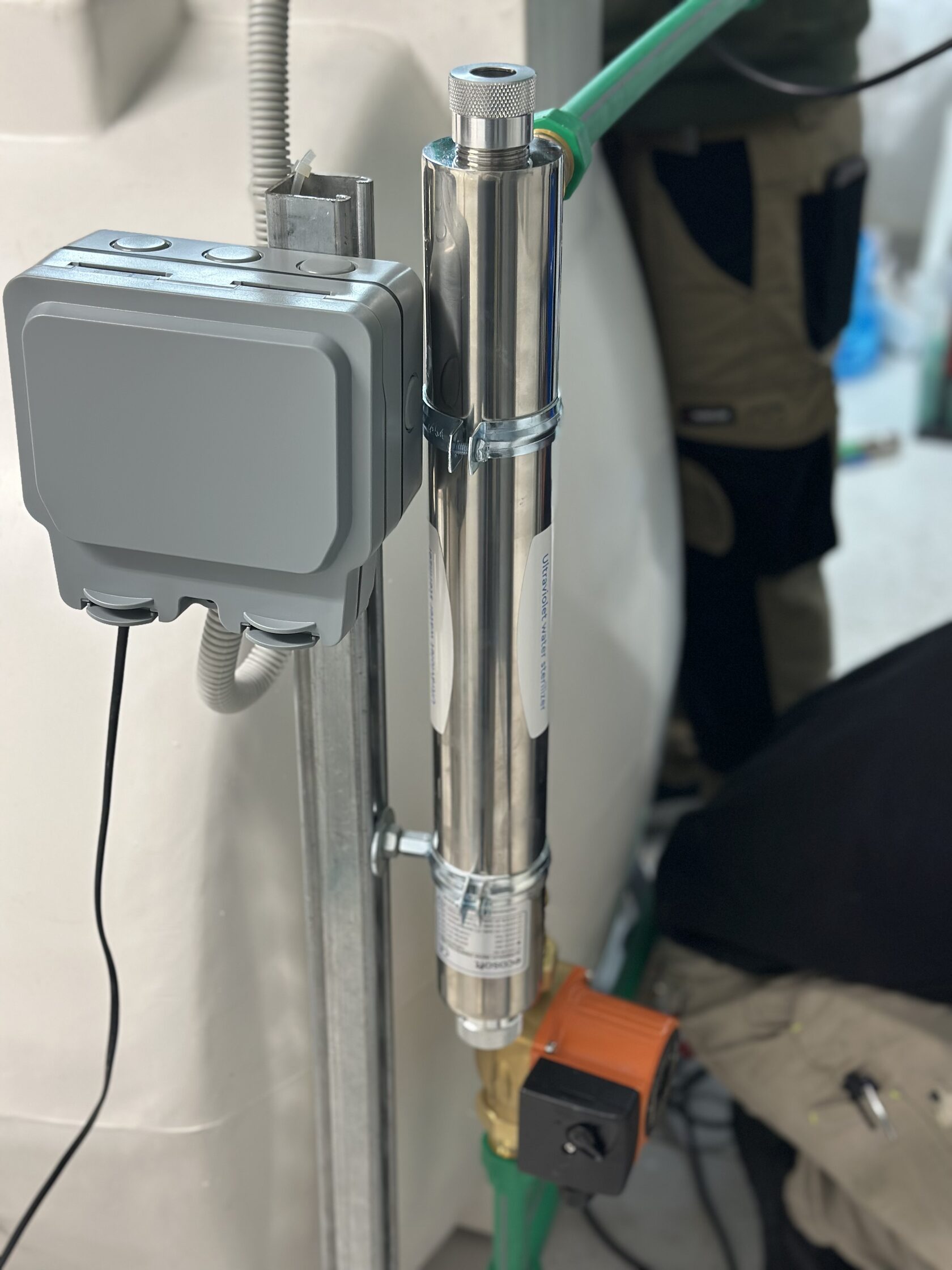
Examples of completed projects
Useful links
Are Water Softeners Safe to Use?
Learn why water softeners are safe for homes and businesses, how they improve water quality, and what to consider in Cyprus for safe use
Can a Water Softener Make You Sick?
Understand the safety of water softeners, including sodium levels and maintenance tips, to ensure healthy and safe water for your home in Cyprus
How Do Water Softeners Save You Money?
Learn how water softeners save money by reducing energy bills, extending appliance life, and lowering maintenance costs. Perfect for hard water in Cyprus
Are Water Softeners a Good Option for Apartments?
Discover how water softeners work for apartments with compact, portable options. Protect appliances and enjoy soft water, even in smaller spaces
Is It Possible to Install a Water Softener in an Apartment?
Learn how to install a water softener in an apartment with compact and portable options. Improve water quality even in small spaces
Advantages and Disadvantages of Water Softeners
Discover the benefits and drawbacks of water softeners. Learn how they improve water quality and tackle hard water issues in Cyprus homes
Do Electromagnetic Water Softeners Really Work?
Learn how electromagnetic water softeners work, their effectiveness, and whether they’re a good option for tackling water hardness in Cyprus
The Truth About Water Softeners: What You Need to Know
Discover the truth about water softeners, their benefits, and common myths. Learn why they’re essential for tackling hard water in Cyprus
Comprehensive Reviews of Popular Water Softeners
Explore reviews of popular water softeners, including features, pros, and cons. Find the perfect solution for hard water in Cyprus homes and businesses
Expert Recommendations for Choosing a Water Softener
Learn expert tips for choosing a water softener, from assessing water hardness to selecting the right system for your Cyprus home or business
How Water Softeners Help Save Your Appliances
Discover how water softeners extend appliance lifespan, improve energy efficiency, and save you money. Perfect for hard water areas like Cyprus
Is Salt from Water Softeners Bad for Your Health?
Learn if salt from water softeners is safe for your health. Discover tips for low-sodium alternatives and solutions for Cyprus homes
Are Water Softeners Harmful to Your Health?
Learn if water softeners are safe to drink, their health impact, and alternatives for low-sodium diets.
Ready to start?
Fill the form and we will contact you
